Dear Temple Emanu-El Families,
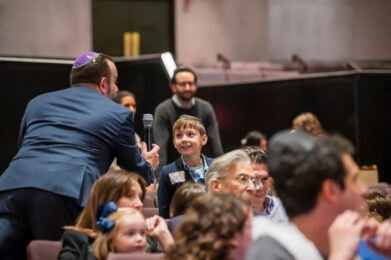
This week, I was invited by The Jewish Education Project to join American Jewish educational leaders and an Israeli delegation from the Shazar Center for Jewish History and Kolot for “Building Destiny: For a Shared Jewish-Zionist Vision.” The day of learning was about what it means to build a shared Jewish future after October 7th.
Throughout the day, I kept returning to a challenge. We belong to the same people, yet the realities shaping our lives can lead us to very different understandings of safety, belonging, and responsibility.
David Bryfman, CEO of The Jewish Education Project, asked what we wanted teenagers in each other’s communities to understand about our lives.
As American parents, we look at our 17-year-olds and wonder which college will offer them both opportunity and safety as Jews. For many Israeli parents, looking at their 17-year-olds means thinking about military service, which unit they’ll join, and whether they’ll come home alive.
Both parents are worrying about their children, but the realities behind those fears are very different, and understanding begins with being willing to listen.
As an educator, I believe education is essential to bridging that divide, and that education begins with relationships.
At Emanu-El, we do that intentionally. Through our partnership with the Jewish Agency, students get to know Yali, our shinshin, building a relationship with a young Israeli role model. Our sixth graders connect with a partner school in Israel, learning about both similarities and differences in daily life. These relationships give our children someone specific to think about, someone to ask, someone to care about as they form their own understanding.
Relationships also call on us to practice something difficult: the willingness to disagree and remain connected. In a polarized world, that takes practice. We want our children to develop their own informed convictions and also to recognize that another person’s experience deserves to be heard. And we have to model that same commitment, including when our children challenge us.
During the gathering, I said that I wanted Israeli teenagers to know that we care about them, but making that care meaningful is work we’re still doing.
This Shabbat, I invite you to talk about it at your table: What would you want Israeli children to know about your children’s lives in America? And what do you imagine Israeli parents would want you to understand about theirs?
Shabbat Shalom,
Mike Witman
Senior Director of Lifelong Learning