
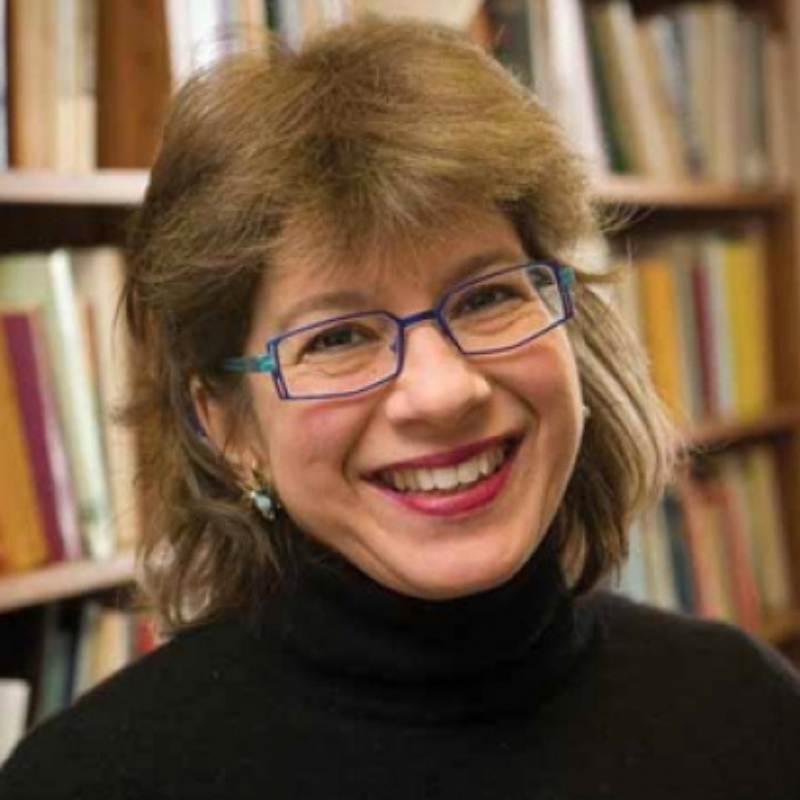
For nearly her entire life, Dr. Susannah Heschel has had an intimate view of the relationship between the Jewish and Black communities. Her father, Rabbi Abraham Joshua Heschel, frequently marched with Dr. Martin Luther King Jr. at Selma and had relationships with many leaders of the Civil Rights Movement.
According to Dr. Heschel, anti-Black racism and antisemitism have functioned and affected each community in “similar and sadistic ways.” At this moment in American history, with rising antisemitism and attacks on landmark civil rights legislation such as the Voting Rights Act of 1965, she says both groups are losing power, authority, and respect. Heschel sees cooperation between Jews and Blacks as being in the best interest of each group and of the health of the nation.
“Power only comes when you build alliances and coalitions,” said Heschel, the Eli M. Black Distinguished Professor of Jewish Studies at Dartmouth College and chair of the Jewish Studies Program. “I think it’s important for both of us [Jews and Blacks] to create alliances with each other and try to regain some of the power and moral respect we need in our society.”
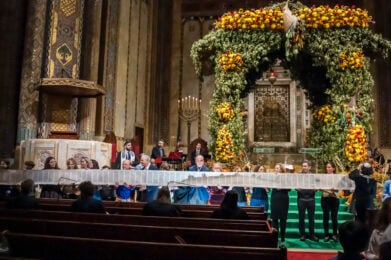
On May 29, Heschel will discuss these concepts in depth with the Temple Emanu-El community as part of the launch of Shared Histories, Shared Futures: The Arielle Patrick & Aaron Goldstein Initiative on Black—Jewish Relations. She will discuss the state of Black—Jewish relations with Rabbi Tamar Manasseh, the first woman ordained by the International Israelite Board of Rabbis and a social justice leader, in a conversation moderated by Alvin Patrick, Executive Producer at CBS News. Shared Histories, Shared Futures is a new five-year series that will explore how antisemitism and racism intersect today through events featuring Black Jews, scholars, and leaders from the religious, business, and cultural sectors.
Over the last several years, many scholars and leaders have raised concerns about the state of the relationship between the Black and Jewish communities, with some stating that the alliance is fractured. Heschel does not see the Black—Jewish alliance as broken. Throughout her career, she has developed and maintained relationships with Black scholars and theologians.
“My conversations with them give me hope,” Heschel said.
In addition to being a tool for political power, Heschel explained that a healthy Black—Jewish alliance is a crucial educational asset. As a Jewish Studies professor, Heschel teaches students from all over the world about Jewish history, thought, and culture. She believes it is important for Blacks and Jews to have a strong knowledge of each other’s history, culture, and experiences so that each group can serve as advocates and ambassadors for the other.
Sixty years after the Civil Rights Movement, Heschel said the movement continues to resonate because of its ability to inspire, something that is needed to confront today’s challenges facing the Black community, the Jewish community, and the world.
“The Civil Rights Movement gives us hope and a sense that there is a possibility of something better in our world,” Heschel said.
Shared Histories, Shared Futures aims to create the foundation for moments of inspiration, collaboration, and understanding between the Black and Jewish communities for decades to come.
To learn more about the Shared Histories, Shared Futures Initiative Launch on May 29, visit here.