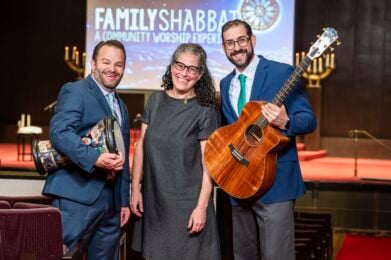

Mike Witman, Director of Lifelong Learning at Temple Emanu-El, is among the voices featured in We Will Prevail: Jewish Responses to Bondi Beach, a collection of Jewish leaders’ responses to the antisemitic attack at Bondi Beach on December 14, 2025. Edited by Rabbi Menachem Creditor, the volume brings together contemporary Jewish thought and prayer, with Mike’s piece engaging themes of bravery, resilience, and responsibility through a lens shaped by learning, community, and Jewish values.
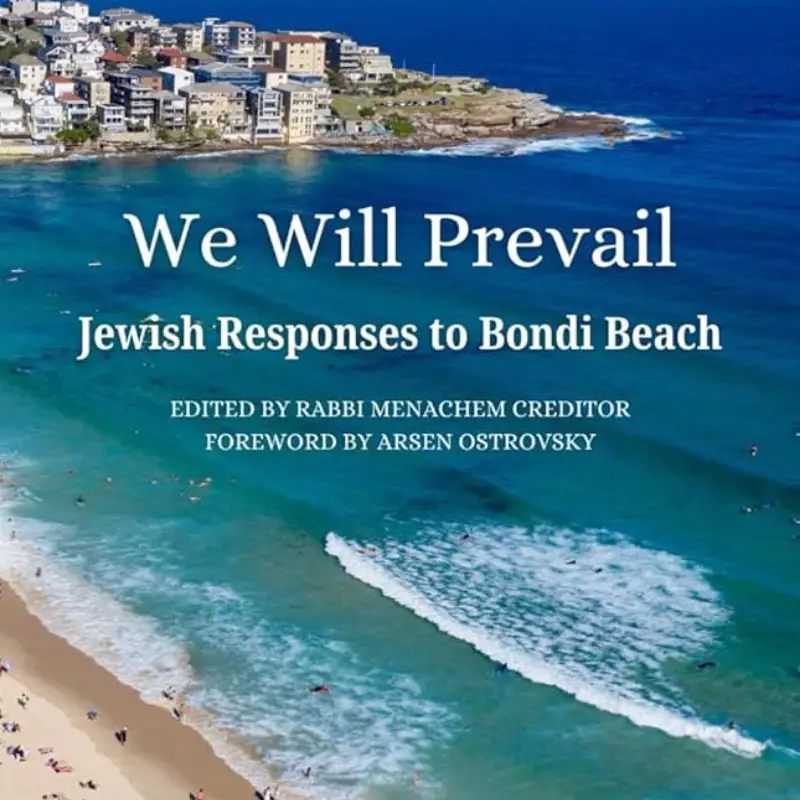
Proceeds from “We Will Prevail” will go to first responders in Sydney and the organizations that have supported the fallen and the survivors of the attack.
Choosing Jewish Courage in a Time of Hatred by Mike Witman
It feels like we have stood alongside every marginalized community throughout history. We showed up when others were targeted. We marched when silence felt easier. We spoke when it cost something to speak. We taught our children that solidarity is not optional, that Judaism demands moral courage, that our story obligates us to care about the dignity of others.
And yet, in this moment of deep pain and rising hatred against Jews, it can feel as though we are standing alone. That realization is disorienting. It hurts in a way that is both personal and collective. It forces questions we would rather avoid but cannot afford to ignore.
In moments like this, do we turn inward and focus only on protecting ourselves? Do we narrow our vision out of fear? Or do we stand firmly on the shoulders of generations who came before us, generations who refused to disappear, refused to be silent, and refused to surrender their values even when doing so would have been safer?
What will we teach our children about this moment in time? What will history books say about us? Did we shrink, or did we rise?
At the heart of this moment is a deeper question, one that goes beyond headlines and politics. Why is Judaism important? Why has our people, so small in number and so frequently targeted, survived centuries of hatred, violence, and attempts at erasure? And not only survived, but continued to create, to build, to teach, to sing, to argue, to dream?
The answer has never been power alone. It has never been numbers. It has always been education.
The Torah is explicit:
וְשִׁנַּנְתָּם לְבָנֶיךָ
“You shall teach them diligently to your children.” (Deuteronomy 6:7)
Not casually. Not occasionally. Diligently. With intention. With urgency. With love. Judaism endures because we insist on teaching our children who they are, where they come from, and what they are responsible for. The Talmud reminds us:
כָּל יִשְׂרָאֵל עֲרֵבִים זֶה בָּזֶה
“All Israel is responsible for one another.” (Talmud Bavli, Shevuot 39a)
Responsibility is not theoretical. It is practiced. It is modeled. It is inherited. At the center of it all stands a demand that has carried our people through every generation:
וְאָהַבְתָּ לְרֵעֲךָ כָּמוֹךָ
“Love your neighbor as yourself.” (Leviticus 19:18) Rabbi Akiva called this verse a great principle of Torah. (Sifra, Kedoshim, Parashah 4)
וְאָהַבְתָּ לְרֵעֲךָ כָּמוֹךָ — רַבִּי עֲקִיבָא אוֹמֵר זֶה כְּלָל גָּדוֹל בַּתּוֹרָה
This is not a naïve ethic. It does not deny danger or excuse hatred. It insists that Jewish survival is bound to Jewish values, and that protecting ourselves and teaching our children are not competing obligations but the same sacred task.
We are still here because we refuse to forget, refuse to give up on learning, and refuse to raise children without roots.
This moment will be remembered. And history will not only ask what was done to us, but who we chose to be.
That answer is being written now, in classrooms and kitchens, in prayer and protest, in how we teach our children to carry Judaism forward with courage, clarity, and love.